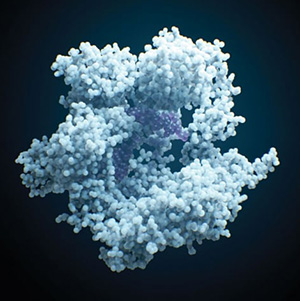
CRISPR & biotechnology is transforming medicine, agriculture, conservation, and our understanding of life. But, how can educators help students make sense of these rapidly evolving technologies?
In this webinar, four high-school educators from across the US showcase their brand new classroom-tested, NGSS-aligned lessons inspired by Science Communication Lab films that explore CRISPR from multiple perspectives.
Together, these lessons demonstrate how film and storytelling can support scientific modeling, data analysis, experimental design, argumentation from evidence, and meaningful discussions about the societal impacts of biotechnology.
We’re excited to return to NABT to share our free classroom-tested resources for teachers, by teachers.
Stop by Booth #214 to meet us and learn more about applying to be a National Educator Ambassador!
We’re also thrilled to highlight incredible sessions from Thu-Sat led by our team and SCL Educator Ambassadors:
Thursday, Oct 29
🕒 1:15 PM | Reunion B 💡 From Story to Science: Using Indigenous Knowledge and Modeling to Teach Nitrogen Cycling 👤 Speaker: Shannon Behrman (Science Communication Lab)
Friday, Oct 30
🕒 4:00 PM | Reunion C 💡 One Film, Three Classrooms: Three Ways Teachers Used Corals: On the Brink to Inspire Scientific Thinking 👤 Speaker: Jennifer Broo (Mariemont High School, OH)
Saturday, Oct 31
🕒 8:45 AM | Cumberland B/C 💡 Beyond the Classroom: Using Films, Hands-On Learning, and Community Engagement to Foster Student Belonging 👤 Speakers: Yajaira Torres-De Jesús (Colegio Rosa-Bell, PR) & Shannon Behrman (SCL)
🕒 8:00 AM | Reunion Tower 🪧 Precision Under Pressure: Teaching CRISPR Through Scientific Decision-Making (Poster) 👤 Presenter: Natalia Coleman (José Martí STEM Academy, NJ)
Looking for engaging resources to teach wildfire, forest ecosystems, climate resilience, and conservation?
Join four educators as they share their brand new classroom-tested lessons inspired by Science Communication Lab films and discuss how storytelling can serve to anchor students’ engagement and inquiry-based learning.
Leave with practical strategies, hands-on student activities, and free NGSS-aligned resources for biology and environmental science classrooms.
Wondering how to use an SCL film in your classroom, but aren’t sure where to start? Our easy-to-use 5E lesson plan recipe helps you transform any SCL short film or feature segment into an engaging, 1-class period activity that brings authentic science stories and practices to life.
You’ll walk away with low-prep, ready-to-use resources—like CER, Talking Chips, and modeling protocols—that you can prepare in just a day and use with any film tomorrow.
Register for free to join us. Attend to get the webinar slides, 18x downloadable worksheets, and a Certificate of Completion!
Webinar facilitated by Ariel Raymond
Hosted by the Science Communication Lab: Sign up for a free educator account to access the resources featured in this webinar along with our library of award-winning films.
Kickstart the school year with classroom-ready lessons to develop your students’ foundational science skills!
In this interactive webinar, you’ll explore three teacher-tested, NGSS-aligned lessons along with eight engaging activities that spark curiosity, strengthen scientific thinking, and connect students with the authentic stories and practices of real scientists.
Whether you teach elementary, middle, or high school science, you’ll walk away with practical, easy-to-implement resources to build science skills that last all year long.
Come observe with us at the Exploratorium’s After Dark: Deep Observations on Thursday August 27!
We’ll start the evening with a screening of Chapter 1 of our documentary film, OBSERVER, followed by hands-on museum exploration.
🌉 Schedule & Details:
7:00 pm | Screening: Catch Chapter 1 of OBSERVER in Gallery 3 (Wattis Studio) and watch how two scientists make sense of an unknown landscape.
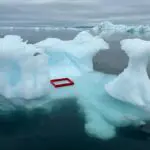
7:30 pm | Museum Exploration: Head onto the museum floor to put theory into practice! Seek out selected exhibits marked with red squares and take a moment to deeply notice the patterns, details, and questions that emerge.
8:00 pm | Share-Out: Join Shannon Behrman and Cidney Hue outside the Wattis Studio for an informal conversation and whiteboard share-out on how the simple act of observing changes the way we see the world.
Whether you’re a science communicator, educator, or lifelong learner, we’d love to see you there!
“Join host Dr. Fanuel Muindi from CAMD for this virtual screening and conversation with Executive Producer Dr. Sarah Goodwin, an Emmy-nominated filmmaker with over a decade of experience building and leading mission-driven organizations at the intersection of science, media, and learning.
Join us at the MIT Museum on June 12 for a special screening of Life Recombined as part of “Existential Risk, Emerging Technology, and Democracy: The Cambridge Recombinant DNA Debate, 50 Years On”
Marking fifty years since the 1976 Cambridge recombinant DNA debate, this symposium convenes historians, scientists, policymakers, and journalists. Together, they will examine how emerging technologies have been identified, debated, and governed, from the recombinant DNA discussions of the 1970s to current conversations around AI and synthetic biology.
Story Craft is a National Geographic Society-funded webinar series, which brings together communication researchers and practitioners to explore evidence-based storytelling. Story Craft is a collaboration between Dr. Reyhaneh Maktoufi and the Science Communication Lab.
The next session on May 26th from 12 to 1 PM ET features Drs. Emily Howell, Nicky Krause, and Sarah Goodwin, who formed a research–practice partnership at the Science Communication Lab to develop a comprehensive study on how diverse audiences relate to and understand scientists through documentary film. The award-winning film that emerged from that partnership, Observer, examines how observation is a fundamental human experience essential to how we understand our world, and also forms the basis of scientific inquiry.
We are so excited to be returning to NSTA in just two weeks! We can’t wait to reconnect with the science education community in Anaheim and share what we’ve been working on since we last saw you in Philly.
Visit Us at Booth #677
We will be at our booth throughout the conference! Come say hello, pick up snacks, and discover innovative ways to bring science stories to life. Learn how to access our free lessons and resources designed to support your classroom and engage your students with human stories of science.
Don’t Miss Our Featured Workshop on Observation:
Observation as a Superpower: A Workshop to Inspire Curiosity, Inquiry, and Critical Thinking in Your Students
In the midst of the conference rush, take a moment to rediscover the joy of looking closely. This interactive session features our new documentary, OBSERVER, which we debuted at NSTA last year, and offers hands-on observational strategies you can take directly back to your classroom. Furthermore, the film is FREE for educators to use!
📅 Thursday, April 16, 2026 from 2:20 PM – 3:20 PM
📍 Anaheim Convention Center – Room 161, North Building
In OBSERVER, filmmaker Ian Cheney embarks on an experiment in which he brings a series of keen-eyed observers — scientists, artists, a hunter — to a range of locations around the world, often without telling them where they are going, and asks them simply to describe what they see.
What unfolds is a deep exploration and celebration of the power of observation: what happens when you find new ways to sense & perceive the world around you? With customary whimsy and a small painted red square that Cheney brings on every journey, the film is an invitation to viewers to find beauty and meaning in even the most quotidian of locales.
(USA, 2025, 94 min.)
Followed by a conversation with producer Sarah Goodwin and film subject Dallas Hudson, moderated by Natalie Compton (Travel Writer, Washington Post)“
This website uses cookies to remember you and improve your experience. To find out more see our Privacy Policy.