Surviving Stress: SOS Response and DNA Repair in Bacteria
Free 9–12 biology & AP Bio lesson on bacterial DNA repair, the SOS response, and antibiotic resistance. Includes modeling, CER activities, and population simulations.
Surviving Stress: SOS Response and DNA Repair in Bacteria
Lesson Plan by Sarmistha Ghosh
60–90
minutes
Students will explore how bacteria respond to DNA damage through the SOS response and how error-prone DNA repair can lead to mutations and antibiotic resistance. Using the film The SOS Response in Bacteria, students will connect molecular biology concepts to real-world issues in medicine and evolution. Through collaborative modeling, data analysis, and evidence-based argumentation, students will explain how DNA repair processes influence bacterial survival and adaptation.
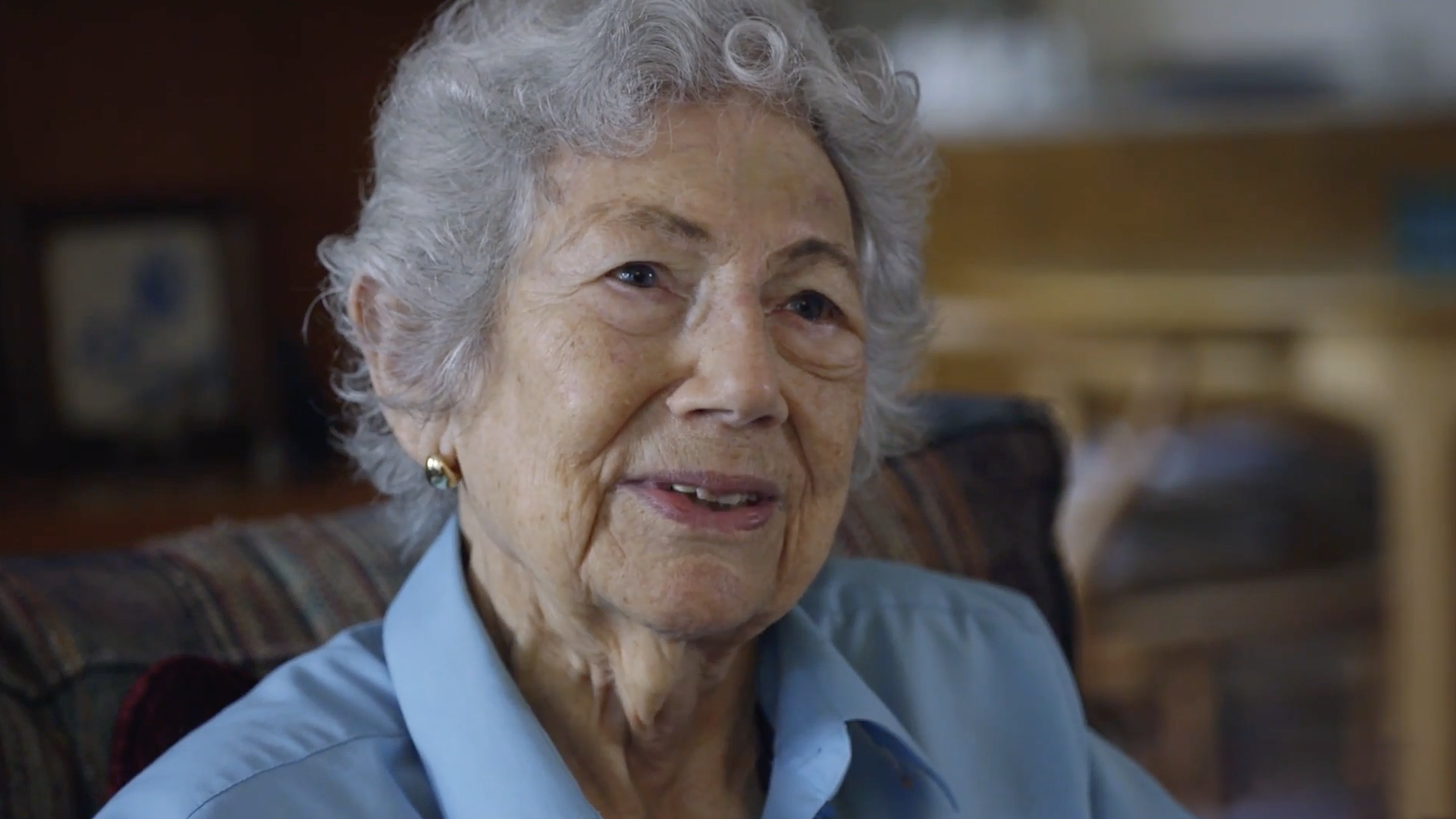
Evelyn Witkin provides a historical perspective on how working at Cold Spring Harbor (CSH) shaped her scientific career and led to the discovery of the SOS DNA damage response in bacteria.
NGSS
AP Biology:
This is a 3-day lesson plan consisting of:
Subject Areas: AP Biology, Honors Biology
Prior Knowledge: DNA structure and replication, gene expression (transcription and translation), mutations, modeling (e.g., using diagrams or physical models to represent molecular processes), antibiotic resistance
Learning Objectives: By the end of this lesson, students will be able to:
Materials Needed:
Lesson Activities: Login to Download Lesson
Before class: Review the video The SOS Response in Bacteria and prepare the guided notes, modeling worksheet, CER questions, beads/candies, dice, coins, and index cards for LexA, RecA, SOS repair genes, mutation, survival, and cell death. Students should already know DNA structure, replication, mutations, and basic gene expression. The lesson connects DNA damage, repair, mutation, antibiotic resistance, and natural selection.
In this activity, students analyze how bacteria respond to DNA damage by engaging with the video, The SOS Response in Bacteria, and completing a guided modeling and analysis task. Students work collaboratively to connect molecular mechanisms of DNA repair to mutation and antibiotic resistance.
Video viewing (8–10 minutes)
Provide students with the Student Worksheet 1. Play The SOS Response in Bacteria video. While watching the video, ask your students to answer Part 1 of the Student Worksheet 1.
Group modeling & analysis (20 minutes)
Using the diagrams in Part 2 of Student Worksheet 1, students will work in small groups (2–4 students) to construct a model of the bacterial SOS response pathway. After completing their model, students should work collaboratively to answer the remaining questions in Part 2 and Part 3, using their diagram to explain the sequence of events and the roles of the key molecules involved. Through these activities, students will explore how error-prone repair can introduce mutations and predict how these mutations may lead to antibiotic resistance.
Whole-class discussion (5–10 minutes)
Ask students to complete the reflection questions in Part 4 of Student Worksheet 1. Conduct a discussion with the class to connect how this cellular response connects to evolution and real-world challenges in medicine.
For this activity, students could work in the same pairs or small groups (2–4 students) to maintain continuity and collaboration.
Scenario analysis (10 minutes)
Ask students to complete the reflection questions in Part 1 of the Student Worksheet 2. Students work together to explain how the SOS response can lead to mutations, antibiotic resistance, and evolutionary change in bacterial populations.
Modeling & graphing (20-30 minutes)
Ask students to work together to complete Parts 2-4 of the Student Worksheet 2. These allow students to learn about bacterial evolution through data collection and interpretation.
Class discussion (10-15 minutes)
Ask students to complete the reflection questions in Part 5 of Student Worksheet 2. Conduct a discussion with the class to connect how this cellular response connects to evolution and real-world challenges in medicine. For the discussion, consider using the following prompts:
Whole-Class Discussion Prompts:
In this follow-up activity, students apply what they learned about the SOS response to explore how mutations can lead to antibiotic resistance in bacterial populations. Using scenario-based modeling and data interpretation, students connect molecular-level DNA repair processes to population-level evolutionary outcomes.
Setup (10-15 min)
In this simulation, students will model how radiation damages DNA, how the SOS response activates repair genes, and how mutations can lead to survival and antibiotic/radiation-resistant bacterial populations. Using drawings, tables, or graphs, model how the bacterial population changes over time with and without antibiotics. Students will record their models and predictions in Part 1 of the Student Worksheet 3.
Ask students to make groups of 2-4 for this activity.
Provide each group with the corresponding materials:
Explain the phenomenon:
After UV radiation damages bacterial DNA, some bacteria die, but a few survive because they activate emergency genes called the SOS response. These survivors may carry mutations that make them more resistant to stressors.
Background for Students:
In normal conditions, bacterial SOS genes are “OFF” because a protein called LexA blocks them. When radiation damages DNA, single-stranded DNA forms. This activates RecA, which causes LexA to break down. Once LexA is removed, SOS genes turn “ON.” These genes repair DNA, but sometimes the repair is error-prone, causing mutations. Some mutations may help bacteria survive and become resistant to radiation.
Simulation Activity (30 min)
Complete the simulation following the steps below. Ask students to add their notes on the Data Collection Table found on the Student Worksheet 3.
Round 1: Normal Bacterial Population
Give each group 20 green (beads) bacteria= Normal Bacteria
Keep some red and blue beads for all the groups to use.
Students record:
|
Type of Bacteria |
Number |
|
Normal Bacteria |
20 |
|
Damaged Bacteria |
0 |
|
Resistant Bacteria |
0 |
Explanation: “All bacteria are healthy. SOS genes are OFF because LexA is blocking them.”
Ask students to add their observations to the data collection table located in the Student Worksheet 3.
Round 2: Radiation Exposure
Students roll a die for each bacterium.
Explanation: “Radiation caused DNA damage in some bacteria.”
Ask students to add their observations to the data collection table located in the Student Worksheet 3.
Round 3: SOS Response Activation
For every red damaged bacterium, students flip a coin.
Explanation: “RecA acts like an emergency signal. It removes LexA so repair genes can be expressed.”
Ask students to add their observations to the data collection table located in the Student Worksheet 3.
Round 4: DNA Repair and Mutation
For each surviving red bacterium, roll a die.
Explanation: “The SOS response can save bacteria, but error-prone repair may create mutations.”
Ask students to add their observations on the data collection table located in the Student Worksheet 3.
Round 5: Selection Pressure
Now expose bacteria to a second radiation treatment or antibiotic.
Explanation: “Resistant mutants have a survival advantage under stress.”
Ask students to add their observations to the data collection table located in the Student Worksheet 3.
Round 6: Reproduction
Each surviving bacterium makes one copy of itself.
Ask students to add their observations to the data collection table located in the Student Worksheet 3.
Whole-class discussion (5–10 minutes)
Ask students to complete the reflection questions in Part 2 of Student Worksheet 3. Conduct a discussion with the class to connect how this cellular response connects to evolution and real-world challenges in medicine.
Extension Activity 1: Experimental Design Proposal
Extension Activity 2: Public Health Communication Task
More Info:
What Worked Well:
Student understanding was assessed through guided video notes, group discussions, bead simulation modeling, graph and data analysis, CER (Claim-Evidence-Reasoning) written responses, reflection questions, and whole-class sharing. Students demonstrated learning by explaining how DNA damage, mutations, and natural selection contribute to antibiotic resistance using evidence from the activities and models.
What My Students Learned:
Like this Lesson Plan?

Lesson Plan by
Hawthorne Academy of Health Sciences












This material is based upon work supported by the National Science Foundation and the National Institute of General Medical Sciences under Grant No. 2122350 and 1 R25 GM139147. Any opinion, finding, conclusion, or recommendation expressed in these videos are solely those of the speakers and do not necessarily represent the views of the Science Communication Lab/iBiology, the National Science Foundation, the National Institutes of Health, or other Science Communication Lab funders.