Rewriting Survival: Genetics and the Future of Coral Reefs
Investigate coral bleaching through hands-on experimental design, data analysis, and a bioethical debate on using CRISPR for conservation.
Rewriting Survival: Genetics and the Future of Coral Reefs
Lesson Plan by Jennifer Broo
3 x 60
minutes
Discover how ecology, genetics, and evolution intersect in the race to save our oceans—and whether CRISPR holds the potential to support coral survival. Guided by the film Corals: On the Brink, students explore the essential role of corals as keystone species and evaluate the impacts of climate change on marine ecosystems. Through hands-on experimental design and data analysis, students investigate how genetic variation and specific gene functions dictate thermal tolerance and conclude with an examination of the benefits and risks of using gene editing for conservation.
Climate change is the biggest threat to coral reefs. Can we use modern genetic tools as one method to help us understand coral biology and perhaps make corals more adaptive to climate change?
NGSS:
This is a 3-day lesson plan consisting of:
Subject Areas: Honors Biology, CP Biology
Prior Knowledge: Students need a foundation in several key biology concepts to successfully engage with this lesson. They should understand the basics of photosynthesis and cellular respiration, including how energy is captured and transferred in living systems. This is especially important for understanding the relationship between corals and their symbiotic algae. Students should also have a basic understanding of molecular genetics, including the relationship between DNA, RNA, and proteins, and how genes are expressed to produce traits. This background helps them make sense of how changes to a gene (such as through CRISPR) can impact an organism’s phenotype. In addition, students should be familiar with the process of natural selection, with a particular emphasis on genetic variation within populations. They should understand that variation in traits can influence survival and reproduction, which is critical for connecting the idea of heat tolerance in corals to both natural selection and potential genetic modification. Students should be familiar with basic concepts of experimental design, including independent variables, dependent variables, control groups, and constants.
Learning Objectives:
Materials Needed:
Lesson Activities: Login to Download Lesson
Give students two minutes to quickly write down anything they know about coral reefs. Prompting questions include:
Next, have students circle one idea they are most confident about and one they are most unsure about. Ask students to add one fact and one question they have to their list while they watch the film Corals: On the Brink.
Introduce Dr. Line Bay. She is the narrator of the SCL video Corals: On the Brink and the researcher whose work on coral reefs inspired the activities in this lesson.
Show students the video, Corals: On the Brink (10 minutes 31 seconds).
In this activity, students in groups of 2-4 rotate through 3 stations to learn about corals as organisms and the role of corals as a keystone species. Students complete the Corals 101 Student Worksheet using the materials provided at each station.
The rotation through the Corals 101 Stations takes approximately 15 minutes per station. This is set up as a 3 stations activity (see materials and instructions listed below). I created duplicates of the 3 stations to accommodate larger classes.
Materials for each station:
Station 1: Corals as a Keystone Species
Station 2: Coral Symbiosis at the Cellular Level
Station 3: Coral Reproduction
Have students answer questions in Part 1 of the Surviving the Shift: Coral Adaptation Lab Challenge Worksheet. Students should use their knowledge from the Corals 101 Stations to answer questions 1-2. Depending on the level of chemistry and background knowledge, students may need help answering question 3 about ocean acidification.
To review these concepts, students can watch the following optional videos: Science Today: Ocean Acidification and The Carbon Cycle.
Divide students into groups of 3–4.
Introduce the concept of a mesocosm: a human-made ecosystem designed for scientific research that includes all the components of a natural ecosystem, but on a reduced scale. Researchers use mesocosms to study a variety of ecological processes, including the impacts of climate change and environmental interactions. They can range from small terrariums to larger systems like water tanks, and may be classified as either closed or open systems.
For this lab, challenge students to design an experiment to test the impacts of chronic 2 °C ocean warming and acidification conditions expected later this century under the Paris Climate Agreement. Provide students with an envelope with the Experiment Supply Pictures. Inform students that they have four mesocosms available for their experiment, along with the supplies in the envelope provided.
Allow about five minutes for groups to brainstorm and answer Part 2, question 1 before they begin creating their experimental design posters. Students should use only the materials in the envelope (unless you choose to allow additional supplies—my students had to petition the project manager if they needed more) and may use up to four mesocosms. They do not need to use all of the materials provided. Students should answer questions 2-5 and create a poster that showcases the experiment they designed.
If time permits, have students complete a gallery walk to observe other groups' experimental designs. During this time, students can ask questions to one another about their ideas and the reasoning behind each other's designs, allowing students to compare and contrast their designs.
Next, provide students with the Physiological Acclimatization in Hawaiian Corals Student Handout, which presents results from an authentic experiment. Students should analyze the data by completing Part 3, questions 1–3, then compare their original experimental design to the methods used in the study. As a final formative assessment, students reflect on how they would revise and improve their own design based on evidence from the paper (questions 4-5).
Note: Physiological Acclimatization in Hawaiian Corals Student Handout could be modified depending on the level of your students. I used Figure 6 in page 3 as with my most advanced students.
Materials needed (Day 2):
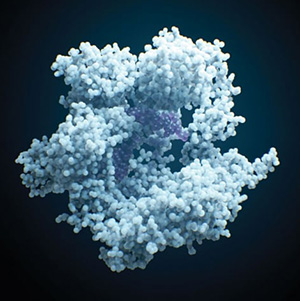
This part introduces students to the concept of gene editing and CRISPR and incorporates the SCL film The Century of Biology. If students aren’t familiar with gene editing and CRISPR, you could briefly introduce the concepts in a short presentation before starting this section.
Begin the lesson by showing the SCL film The Century of Biology. As they watch the film, have students record answers to questions in Part 1 from the Using CRISPR to Save Corals Student Worksheet.
Divide students into groups of 2–3 and give each group a set of gene editing decision cards. Students should sort the cards according to the instructions on the student worksheet. They should record their responses in the chart and answer questions 2–4 of Part 2 with their group. Have groups share their responses with the class.
Next, tell students they will read a summary of a research study designed to identify genes that influence coral’s ability to withstand higher temperatures. If students completed the experimental design challenge in Part 2, remind them that different genes showed varying abilities to withstand the different conditions in the mesocosms.
Students should read the research summary and answer questions 1–6 from Part 3. Consider using these questions as a formative assessment to check for student understanding.
Materials needed (Day 3):
In Day 3, more advanced students who already understand the concept of gene editing could view the whiteboard animation CRISPR: A Word Processor for Editing the Genome and use Option B of the Using CRISPR to Save Corals Student Worksheet. This version focuses more on the mechanism by which CRISPR-Cas9 edits the genome
As an extension to Day 3, consider using the lesson, “Engineering the World Around Us: Genome Editing and the Environment” from Personal Genetics Education & Dialogue (PRED). The lesson focuses on how gene editing could potentially improve human health, agriculture, and the environment.
More Info:
What Worked Well:
What My Students Learned:
Like this Lesson Plan?

Lesson Plan by
Mariemont High School








This material is based upon work supported by the National Science Foundation and the National Institute of General Medical Sciences under Grant No. 2122350 and 1 R25 GM139147. Any opinion, finding, conclusion, or recommendation expressed in these videos are solely those of the speakers and do not necessarily represent the views of the Science Communication Lab/iBiology, the National Science Foundation, the National Institutes of Health, or other Science Communication Lab funders.

