Life After Wildfires: Observing and Predicting Forest Recovery
1-period video activity exploring forest succession, observation practices, and science identity with elementary and middle school worksheets.
Life After Wildfires: Observing and Predicting Forest Recovery
Lesson Plan by Brian J. Ciuffreda
40-60
minutes
How do ecosystems recover after a wildfire? In this 1-period video-based activity, students investigate ecological succession by stepping into California’s ancient redwood forests alongside real-world experts. Using the short film A Walk in the Woods, students make predictions, collect visual and auditory evidence, and evaluate forest regrowth. Designed for maximum flexibility across elementary and middle school classrooms, this NGSS-aligned lesson includes ready-to-use, tailored worksheets for Grades K–5 and Grades 6–8—helping young learners sharpen their scientific observation skills while building an authentic science identity.
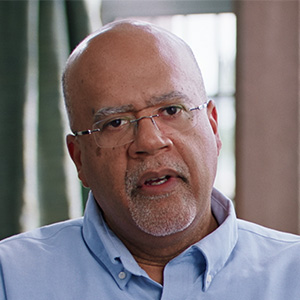
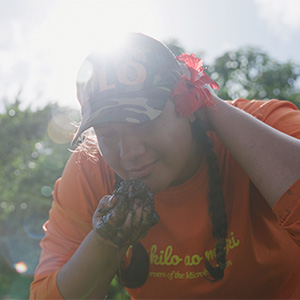
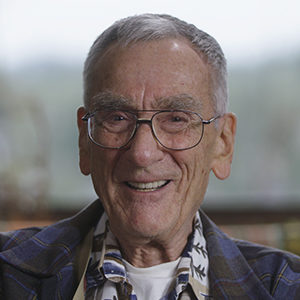
What does a redwood forest look like, and sound like, in the wake of a devastating fire? Walk through a fire-ravaged redwood forest with experts Beatrix Jiménez, Ian Bornarth, and Alex Jones. Their observations make visible the forces of destruction and regrowth throughout the redwoods ecosystem.
NGSS:
Cross-cutting concepts:
Science and Engineering Practices (SEP):
Foundational Pillars:
Students will practice important science skills like making predictions, making observations, and reflecting on prior work through the setting of a film that explores the regrowth of an area of forest after a wildfire. Additionally, students will develop their sense of science identity by observing through the eyes of the three visitors to the forest in the film. This may constitute the entire lesson, or it may be incorporated into an ecology unit with the incorporation of topics like ecological succession, dynamic balance in an ecosystem in response to natural disasters, and cycles of matter.
Subject Areas: General Science, Life Science, Ecology
Prior Knowledge: If the learning objective is to improve students’ science identity, no prior knowledge is required. For inclusion in an Ecology Unit, basic knowledge of ecosystems, energy roles, ecological succession, and cycles of matter is beneficial.
Learning Objectives:
Materials Needed:
Lesson Activities: Login to Download Lesson
Distribute Student Worksheet Middle School (recommended for grade 6 and up) or Student Worksheet Elementary (recommended for K-5) to students depending on their level. Have them read the introductory information and complete PART 1: PREDICTIONS. For K-2 students, it is recommended to complete this together through class discussion.
While viewing the film, ask students to complete PART 2 of the student worksheet (Elementary; Middle School). In this part, students record observations pointed out by experts Beatrix Jiménez, Ian Bornarth, and Alex Jones in the film, as well as other things that the students are able to observe that are not necessarily pointed out by the scientists featured on screen. To avoid students’ confusion, review the following items:
Ask students to complete PART 3 of the student worksheet (Elementary; Middle School). This step involves reflection and analysis of predictions, as well as students writing a paragraph describing what each student found most surprising in the film.
Note: In case it is not raised, the most common surprises reported in my field tests were the amount of ground cover present and that lots of trees “only” burned about halfway up, leaving the tops of the trees intact.
Note: On the Elementary Level Worksheet, these are specified. In the field test and for older students, I found it interesting to see how many included senses other than seeing in their predictions.
Note: Beatrix is a Land Stewardship Associate and previously worked as an environmental consultant. Ian is a professional photographer. Alex works as the University of California, Santa Cruz Campus Natural Reserve Manager, where he supports educational programs and research on preserved lands on the campus. Direct the discussion towards recognizing that all three of them behaved as scientists through their observations and analysis. You can make the statement that “You don’t have to have the job title ‘scientist’ to BE a scientist.”
For deeper learning: Assign smaller groups to discuss more complicated topics and then present back to the class. Possible discussion prompts:
For diverse learners: You might choose to use the Elementary Level Worksheet, as it specifies making one prediction each related to sight, sound, smell, and touch. It also has a simplified introductory text and a simplified reflection section. For further support, provide “observation starters” (like sentence starters) to aid in the completion of Part 2. Advanced learners might benefit from leading small discussion groups after viewing the film.
Extension Activities:
More Info:
What Worked Well:
My students were highly engaged while viewing the film. If anything, the 5th graders (more so than the 6th graders) needed a reminder to write down their observations because they were so focused on what they saw that some of them were forgetting to write. The sharing of things that surprised them led to animated discussions. Living far from the redwood forests, there were lots of things that my students found interesting and surprising, and this film feels like the next best thing to actually walking through a redwood forest.
What My Students Learned:
Like this Lesson Plan?

Lesson Plan by
Princeton Charter School








This material is based upon work supported by the National Science Foundation and the National Institute of General Medical Sciences under Grant No. 2122350 and 1 R25 GM139147. Any opinion, finding, conclusion, or recommendation expressed in these videos are solely those of the speakers and do not necessarily represent the views of the Science Communication Lab/iBiology, the National Science Foundation, the National Institutes of Health, or other Science Communication Lab funders.


