Observe Like a Phenologist: Tracking Nature’s Patterns Over Time

Students collect outdoor field data and observe local ecosystems over time in this hands-on NGSS-aligned lesson.

Observe Like a Phenologist: Tracking Nature’s Patterns Over Time

Lesson Plan by Susan Bartol

Lesson Overview
Grades:
Key Concepts:
  • Observation
  • Patterns in nature
  • Ecosystems and interactions
  • Nature of science
Activities:
  • Film + reflection
  • Phenology data collection
  • Small and large group discussions or reflections
  • Sketch outdoor observations
  • Pattern identification
Time Needed:

3x 45-60

minutes

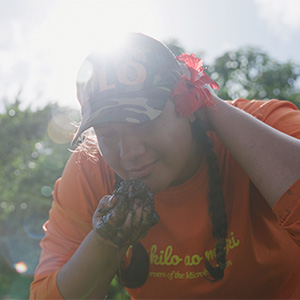
Students explore observation as a foundational scientific practice by engaging in outdoor data collection inspired by phenologist Dallas Hudson from Chapter 7 of the documentary film, Observer. Through repeated observation, students begin to notice patterns in living and non-living components of their local environment and consider how scientists use data over time to understand change.

Free for educators! Inspiring documentary film that explores the power of observation—in science, art, and everyday life—to transform how we see the world.

NGSS Performance Expectations: 

  • 3-LS1-1 Develop models to describe that organisms have unique and diverse life cycles but all have in common birth, growth, reproduction, and death.
  • 3-LS4-3 Construct an argument with evidence that in a particular habitat some organisms can survive well, some survive less well, and some cannot survive at all.
  • 4-LS1-1 Construct an argument that plants and animals have internal and external structures that function to support survival, growth, behavior, and reproduction.
  • 5-LS2-1 Develop a model to describe the movement of matter among plants, animals, decomposers, and the environment.
  • 5-ESS2-1 Develop a model using an example to describe ways the geosphere, biosphere, hydrosphere, and/or atmosphere interact.

Nature of Science connections:  

  • Scientific knowledge is based on empirical evidence.
  • Science relies on repeated observations and patterns over time.
  • Science is a human endeavor accessible to everyone.
  • Scientists use multiple methods, including observation—not just experiments.

How can I use this chapter in an interdisciplinary way?

How can I use this chapter in an interdisciplinary way chart

This is a 3-day lesson plan consisting of:

  • Day 1 - Engage & Reflect (45-60 min)
  • Day 2 - Phenology Scavenger Hunt: Outdoor Observation (45-60 min)
  • Day 3 - Explain: Sensemaking (45-60 min)

Subject Areas: Biology/Life Science

Prior Knowledge: All animals need food in order to live and grow. They obtain their food from plants or  from other animals. Plants need water and light to live and grow.  (K-LS1-1); Plants depend on water and light to grow. (2-LS2-1); There are many different kinds of living things in any area, and they exist in different places on land and in water. (2-LS4-1)

Learning Objectives: Students will be able to...

  • Collect and record observational data about their local environment
  • Distinguish between living and non-living components of an ecosystem and their relationships
  • Identify patterns in their observations (including presence/absence)
  • Explain how repeated observations help scientists understand change over time
  • Reflect on their role as observers and contributors to scientific knowledge

Materials Needed:

  • Video clip (Observer, Chapter 7)
  • Observer Chapter 7: Student Viewing Guide
  • Phenology Scavenger Hunt worksheets
  • Clipboards or hard surfaces
  • Pencils
  • Optional: BLM Phenology Wheel
  • Optional: Thermometer, weather icons
  • Optional: Student journals
  • Optional: Frame or other material (like yarn) for marking an observation boundary

Lesson Activities: Login to Download Lesson

The goal for this video + reflection activity is to reframe what counts as science.

Step 1: Distribute Student Viewing Guide (1 min)

Hand out the worksheet Observer Chapter 7: Student Viewing Guide to each student.

Step 2: Before the film (5 min)

Prompt students with the “Before” questions:

  • How do scientists “observe”?
  • What can you learn from “observing”?
  • How do you feel when you are outside in your environment? (connects to minute 6:50 when Dallas takes a break on the ground)
Step 3: During the film (30 min)

Screen Chapter 7 (or clip from it). You may have to stop periodically so that students can answer the questions under “During the film” section of the Viewing Guide.

Step 4: After the film (10 min)

Have students reflect on and answer the “After the film” questions in the Viewing Guide. 

Students participate as citizen scientists, using the Phenology Scavenger Hunt worksheet to record outdoor observations of their local environment. The goal for this activity is to get students to observe closely and collect real-world data.

What to look for during this activity:

  • Careful observation of what is present and what is NOT (noticing detail).
  • Early pattern thinking.
  • Use of evidence-based language (“I saw…”, “I noticed…”).
Step 1: Weather Observations (5 mins)

Have students record their initial observations using the Northeast Phenology Scavenger Hunt worksheet or your own adapted Scavenger Hunt worksheet.

  • Prompt the students:
    • “Before you start looking for plants and animals, record the weather observations for today.”
    • “What is the weather like? How might that affect what you see?”
  • Have the students record in their worksheet:
    • Weather conditions (sunny, cloudy, windy, etc.)
    • Temperature (if available)
    • Students answer “Think like a Seasonal Scientist: What are the seasonal averages for temperatures and precipitation during this time of year?”
Step 2: Begin Observations & Data Collection (10 min)
  • Prompt the students:
    • “Now begin observing. Move slowly, look closely, and record what you see using tally marks. Focus on plants and animals, and any signs of activity.”
  • Have the students observe their environment carefully and record tally marks for:
    • Plants (dandelion, grass, tree leaves, select their own plant)
    • Animals (squirrels, robins, butterflies, bees, ants)
Step 3: Deepen Observation (10 min)
  • Prompt the students (while circulating):
    • “What patterns are you noticing?”
    • “What surprises you?”
  • Have the students: 
    • Continue observing and refining tallies
    • Discuss observations with partner
    • Begin identifying patterns (even informally)
    • Once students collect data, they will summarize their plant and animal observations, and predict how the plants and animals may be different next season.
Step 4: Sketch & Categorize (10 min)
  • Prompt the students to get out notebooks or a blank sheet of paper:
    • “Now choose part of the environment to sketch. Include as much detail as you can.”
    • “After sketching, identify which parts are living and which are non-living.”
  • Have the students draw a section of the environment and label or list:
    • Living components (plants, animals)
    • Non-living components (air, rocks, water, human-made objects)
Step 5: Wrap-Up & Transition (10 min)
  • Bring student groups back together and prompt:
    • “Finish your last observation and return to our meeting area.”
    • “Write an answer to the reflection question and follow up question.”
    • “Be ready to share: one thing you observed and one thing that surprised you.”
  • Have the students:
    • Wrap up drawing and listing
    • Return materials
    • Transition back for discussion

The goal is to have students make meaning from their observations and connect to scientific ideas about patterns, evidence, and repeated observation. The teacher will document observations made throughout the year in a spreadsheet.

What you look for during this activity:

  • Use of evidence (“I saw…”)
  • Pattern recognition (“many groups noticed…”)
  • Early causal reasoning (“maybe because…”)
  • Understanding of repeated observation
  • Predictions for next observation
Step 1: Share Observations (10 min)
  • Prompt students:
    • “Now that you’ve collected data like scientists, we’re going to make sense of what we observed.”
    • “Turn to your partner and share one thing you observed.”
    • “Now, let’s hear a few examples. What did you notice?”
  • Have the students:
    • Share observations in pairs
    • Contribute to whole-group discussion
  • Optional: While students are sharing, you record student observations on board (e.g., “lots of bare branches,” “no insects,” “birds feeding”)
Step 2: Identify Patterns (10 min)
  • Prompt students:
    • “Let’s look across all of our observations. Do we notice any patterns?”
    • “Was there anything that showed up again and again?”
    • “Was there something that was mostly missing?”
  • Have the students:
    • Look across shared data
    • Identify patterns (e.g., many bare trees, little insect activity)
    • As students share, make sure to help students:
    • Name patterns clearly
    • Articulate ideas using evidence
Step 3: Introduce Explanation Thinking (10 min)
  • Prompt students:
    • “Scientists use patterns as clues to explain what’s happening in the environment.”
    • “Why do you think we saw [pattern]?”
    • “What might explain why something was missing?”
    • “How might the weather or season affect what we observed?”
  • Have the students:
    • Offer ideas and explanations
    • Use evidence from their observations
Step 4: Introduce Phenology & Connect to Film (10 min)
  • Prompt students:
    • “There is a word for studying changes like this over time. It’s called phenology.”
    • “The scientist in the video comes back to the same place every day to track these changes. Why would a scientist return to the same place again and again?”
    • “What could they learn that we couldn’t learn from just one day?”
  • Have students:
    • Think and respond after each prompt
    • Connect their experience to long-term observation
Step 5: Reflection & Exit Ticket (5 min)
  • Prompt the students:
    • “Today you used evidence (your observations) to understand the world. That’s what scientists do.”
    • “Scientists also look for patterns over time, not just in one moment.”
    • “And just like you, scientists use simple tools like notebooks to record their ideas.”
  • Have the students:
    • Listen and reflect
    • Begin to see themselves as scientists
  • End with an exit ticket:
    • “One thing you learned today about observation…” or “One thing you learned today about what it means to be a scientist…”

Same Spot for a Year - visit the same spot on your school grounds over the course of the year. Document your observations in a Phenology Wheel.  

Journals - for every outing take your phenology journal and record your observations using sketches and/or words. What connections can you make between the things you observe?  

Sense of Place/Social Studies Connection - Research the Indigenous people of your area.  Who are they?  How did they use the land? What species were there at that time?  Are these species still present? If not, which ones were lost?  What are some possible explanations to why? How can we communicate what is here now with future generations? 

Sound Mapping Activity - From Observer Activity Book

Build a Food Chain

More Info:

  • Test audio/video of film chapter
  • Survey your outdoor area for safety prior to taking students out.
  • Be aware of student medical needs such as asthma, allergies, accessibility, etc.
  • Template+How to create your own local scavenger hunt
  • August/September = Summer; October/November = Autumn; January/February = Winter; April/May = Spring

What Worked Well:

  • Students were able to see themselves as scientists in their own backyard. Science happens everywhere and everyone can participate.
  • Making observations using multiple modalities makes science learning accessible to all learners.
  • Being able to experience their local habitat over time helped students to develop stewardship of the land.
  • Students engaged in discussion with one another - asking questions, refining thinking, and recognizing the continuum of learning throughout the year.

What My Students Learned:

  • Changes occur over time and can be predicted.
  • Science is both a body of knowledge and a process.
  • Relationships exist among living and non-living things.
  • Students recognize that they are active contributors to science.

Like this Lesson Plan?