Redwood Resilience: Analyzing Tree Rings and Wildfire Recovery
Lesson Plan by Danielle "Dani" Jo White-Yelito
5 x 40
minutes
In this multi-day lesson, students investigate how redwood forests recover after wildfire by analyzing the film A Walk in the Woods, examining redwood survival traits, and conducting hands-on analysis of tree rings or “cookies.” Students apply scientific reasoning and data analysis to construct claims about environmental conditions and forest management decisions. The lesson culminates in a student choice board project demonstrating understanding of resilience, climate, and ecosystem recovery.
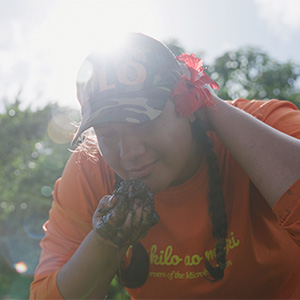
What does a redwood forest look like, and sound like, in the wake of a devastating fire? Walk through a fire-ravaged redwood forest with experts Beatrix Jiménez, Ian Bornarth, and Alex Jones. Their observations make visible the forces of destruction and regrowth throughout the redwoods ecosystem.
NGSS:
This mult-day lesson plan consists of the following:
Subject Areas: Environmental Science, Biology, Earth Science
Prior Knowledge: Basic ecosystem structure, Producers/consumers, Climate vs. weather, Fire as ecological disturbance
Learning Objectives: Students will be able to...
Materials Needed:
Lesson Activities: Login to Download Lesson
Film Viewing (30-40 minutes)
Students complete Parts I and II of the A Walk in the Woods Student Worksheet while watching the film A Walk in the Woods. Students are asked to record the following:
You can use the following focus prompts from the transcript to start a discussion after watching the film: thick bark protection, epicormic sprouting, and resilience quotes.
Note: If students need to better understand what land managers are, you can use this video: Meet our land managers by SJRWMD.
After the film screening, ask students to complete Parts III and IV of the A Walk in the Woods Student Worksheet.
Redwood Traits Data Table (20-30 minutes)
Students move to Part V of the A Walk in the Woods Student Worksheet. They select TWO trees land managers should prioritize while planting new trees based on: bark thickness, resin content, sprouting ability, and fire survival. I used sentence stems to help students justify their reasoning.
Note: An expected answer could be that students would select Redwood A and B due to thick bark and high survival traits.
Rainfall & Recovery Graph Analysis (30-40 minutes)
Ask students to complete Part VI of the A Walk in the Woods Student Worksheet. Students analyze the bar graphs in the worksheet and answer questions about:
Note: An expected data interpretation could be that more rainfall produces a higher recovery percentage.
Tree Rings Guided Demo (10 minutes)
Review with your students the guided demo of Tree Rings to learn to interpret the meaning of the rings. Before starting, model to your students how to count the rings, measure the ring width (mm), identify scars, and interpret drought or fire years in the rings. During the demo, ask students to complete Parts I and II of the Redwood Tree Rings Student Worksheet.
Teachers: Check out this article to enhance your understanding of tree rings and what they tell us about ecological events.
Analyzing Tree Rings and Class Discussion (30 minutes)
After completing the demo, ask students to complete Parts III to VI of the Redwood Tree Rings Student Worksheet.
Once everyone is done with the worksheet, you can have a class discussion to connect the tree rings activity and what they have learned to climate, water availability, and fire disturbance.
Teacher Prep: Set Up Lab Stations
Create the 3 stations using the Tree Rings Lab - Stations Setup document. Instructions: Print these tree rings to create 3 stations. Students will rotate between each station.
Depending on the number of students you have, you may choose to duplicate the stations to allow the flow between stations to go more smoothly.
Station 1, Pg 1 shows wide rings or favorable conditions;
Station 2, Pg 2 shows narrow rings, which represent stress; and
Station 3, Pg 3 shows fire scars (disturbance).
Tips for Teachers:
Students Rotate Through Lab Stations (40 minutes)
Students should complete the Tree Rings Lab - Student Worksheet while rotating through stations. Using the worksheet, students measure diameter, ring width, and observe patterns.
Through this lab, students learn that wet years lead to wider rings, drought leads to narrow rings, and fire shows scars but continued drought in redwoods.
Note: You can clarify that the healthy tree ring (page 1) has a few slightly narrower bands, but that’s normal variation — not necessarily drought-level stress. Educators can review a list of expected observations here.
Students select ONE project. Options include:
All require evidence from:
For Support:
For Advanced Learners:
More Info:
What Worked Well:
Students were most engaged when learning was visual, concrete, and connected to real land‑management decisions.
Students demonstrated understanding across multiple modalities:
What My Students Learned:
Across classes, students developed several key understandings:
Like this Lesson Plan?