To Burn or Not to Burn? Evaluating the Role of Fire in Ecosystems
Students evaluate the role of wildfires and prescribed burns in managing forests through multimedia analysis, group discussions, and evidence-based argumentation.
To Burn or Not to Burn? Evaluating the Role of Fire in Ecosystems
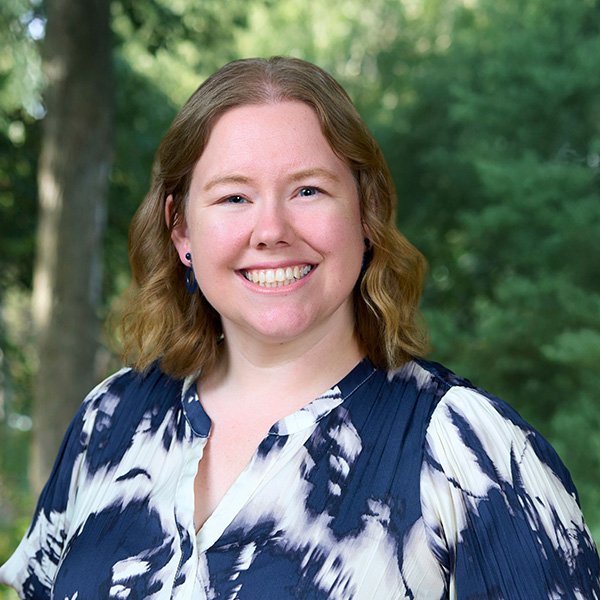
Lesson Plan by Ariel Raymond
2 x 55
minutes
Students will analyze how wildfires impact ecosystems and how patterns in fire behavior help scientists understand and manage fire risk. Using Fire Among Giants and a reading on prescribed burning practices, they will examine how fire can create both risk and resilience within ecosystems. Students will engage in evidence-based argumentation to explain how fire can both harm and support ecosystem recovery over time.
Fire is a force for destruction, but also of rebirth. This lesson is at the heart of Fire Among Giants, an intimate and cinematic look at a world famous redwood forest in the wake of the most destructive inferno on record.
NGSS:
This is a 2-day lesson plan consisting of:
Subject Areas: General Science | Environmental Science | Climate Science
Prior Knowledge: Prior to this lesson, students should know that the ingredients for a wildfire are fuel, heat, and oxygen.
Learning Objectives: Students will be able to
Materials Needed:
Lesson Activities: Login to Download Lesson
Do Now (5 min)
Ask students, “What are your current thoughts and feelings about wildfires? Explain your thinking. What experiences or ideas have shaped this perspective?”
Students write responses in their notebooks. Then, invite students to share their answers with their neighbors (Think-Pair-Share).
Introduction (3 min)
Briefly explain the purpose of today’s lesson: “Many different places in the world experience wildfires. This film was created following the 2020 CZU Lightning Complex fire that happened in Big Basin, California. As we watch the film, I want you to consider how or why a wildfire might be considered good, bad, or neutral.”
Watch Fire Among Giants (17 min)
Provide students with the Student Worksheet Wildfires: Good, Bad, or Neutral?.
Play the film Fire Among Giants. Encourage students to write on their worksheet, considering examples from the film, of how wildfires can be considered good, bad, or neutral.
See Teacher Appendix 1 for examples that may be considered for each category.
After watching the video, give students 2-3 minutes of think time to complete their worksheet.
Group Discussion (Round Robin) (15 min)
Explain to students that they are going to share examples from the film about how fire can be viewed as good, bad, or neutral. Students will use a round-robin discussion structure (see below) in small groups of 3-4. Time the students by giving them 1 minute for each column (good, bad, or neutral) on their worksheet. Students will give one example at a time, following the Kagan cooperative structure for a round robin (see below).
Round Robin Procedure:
Purpose: Every student takes a turn sharing ideas aloud in small groups.
Steps:
Credit: Suggested Kagan Structures, Kentucky Department of Education
Class share (5 min)
Once students have shared in their own groups, students will then submit their ideas on the main board of the classroom. Students should write down new ideas they didn’t have written before.
Closing: The Most Significant Point (10 min)
At the end of the lesson, ask students to write down in their notebooks the most significant point made during this lesson that contributed to their learning. For example, you can say, “Today we determined how wildfire might be considered good, bad, or neutral following the CZU Lightning Complex fire. What point made during today’s activity or discussion best helped you understand how fire relates to the ecosystem in Big Basin, CA?”
Give students time to write, and end the class with them sharing their answer with their shoulder partner (Think-Pair-Share).
Credit: The Most Significant Point comes from Science Formative Assessment by Page Keeley.
Do Now (5 min)
Display the following prompt for students:
“Yesterday, we explored how wildfire can be considered good, bad, or neutral depending on its effects on people and ecosystems.
Imagine that a forest manager intentionally sets a small fire in a forest to reduce excess vegetation and help prevent a larger, more destructive wildfire in the future.
What do you think about this idea? Would you support or oppose it? Explain your thinking. What questions would you have before deciding?”
Have students respond independently in their notebooks for 3–4 minutes. Then, have students briefly share their responses with a shoulder partner.
Article Reading (20 min)
Tell students that their next activity will be reading about prescribed fires, and how they help mitigate wildfire risk by reducing excess fuel in forests, supporting healthier ecosystem conditions, and lowering the likelihood of large, high-intensity fires.
Hand out a copy of the article "Wildland Fire: What is a Prescribed Fire?" to each student. You may also choose another article related to this topic that fits your geographical region - please reference Prescribed Fire Stories under Additional Resources.
As students read, they should take Cornell Notes and annotate the article. Students may take Cornell Notes in their notebooks or use the Article Reading - Cornell Notes Worksheet.
Engaging in Argument with Evidence (15 min)
Using evidence from the video and from the reading, students will start drafting a scientific explanation using the Developing a Scientific Explanation Tool (DSET) Worksheet.
Students will be asked to answer the question: Should prescribed burns be used in this region (Big Basin, CA)? Why or why not? Alternatively, you can focus your question on your own region.
Have students fill out the DSET worksheet. They can use evidence from the video and articles, and explain with reasoning why Big Basin (or your chosen region) should or should not use prescribed burns. For an extension, you may want to provide articles or resources that oppose prescribed burns. Examples of those resources can be found in the Additional Resources section.
Discussion Protocol (10 min)
For this next activity, students will be partnered up for the A/B Partners Protocol for Critical Thinking (Credit: Ambitious Science Teaching).
Give each student a copy of the worksheet A/B Partners Protocol for Critical Thinking. Have students determine who will be A and who will be B. Students should take about 5 minutes to complete their first round of steps 1-5. Then, have them reverse roles and complete the same steps, but with B sharing their ideas and A listening to understand.
Closing (5 min)
Students will reflect on their understanding after completing the A/B Partners Protocol for Critical Thinking. Prompts are given to help them. They should write their reflection in their notebooks.
Extensions:
Differentiations:
More Info:
Students used evidence from a wildfire case study film and a scientific article to construct a claim about whether prescribed burns should be used in their region, explaining both positive and negative impacts of fire on ecosystems and human communities.
Students distinguished between wildfires and prescribed burns and used reasoning to explain how prescribed burns can reduce wildfire risk, manage fuel loads, and support ecosystem resilience and recovery.
What My Students Learned:
Students developed an understanding that fire is a natural part of many ecosystems and can be essential for maintaining certain ecological relationships. They also learned that prescribed burns are a fire management strategy used to reduce fuel buildup and help mitigate the risk and severity of uncontrolled wildfires that can negatively impact human communities and environments.
Like this Lesson Plan?
Lesson Plan by
Aveson Global Leadership Academy







This material is based upon work supported by the National Science Foundation and the National Institute of General Medical Sciences under Grant No. 2122350 and 1 R25 GM139147. Any opinion, finding, conclusion, or recommendation expressed in these videos are solely those of the speakers and do not necessarily represent the views of the Science Communication Lab/iBiology, the National Science Foundation, the National Institutes of Health, or other Science Communication Lab funders.


